
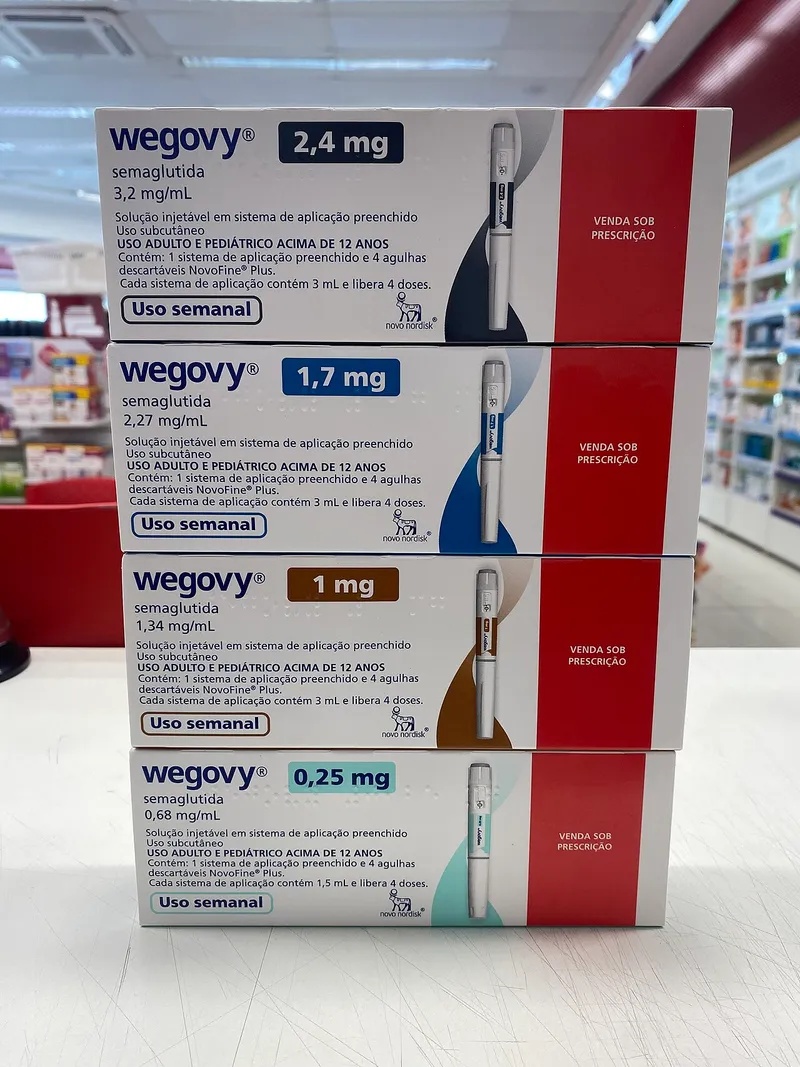
Novo Nordisk said a post hoc analysis of its phase 3 ESSENCE trial found weekly semaglutide 2.4 mg improved liver injury, disease activity and fibrosis markers at 72 weeks in MASH patients with a BMI below 27.
A weekly 2.4 mg dose of semaglutide, sold as Wegovy, improved measures of liver injury, disease activity and scarring at 72 weeks in adults with the liver disease MASH who had a body mass index below 27, Novo Nordisk said on Sunday, presenting a post hoc analysis of its phase 3 ESSENCE trial at The Liver Meeting in Denver.
The subgroup covered 106 of the 800 participants in the trial's 72-week interim analysis, all of them adults with MASH and moderate-to-advanced liver scarring. Liver enzymes fell further on semaglutide than on placebo, with estimated treatment ratios of 0.61 for ALT and 0.67 for AST, and non-invasive fibrosis markers including ELF and PRO-C3 also favoured the drug. One measure, liver stiffness by VCTE-LSM, did not reach statistical significance.
ESSENCE randomised 1,197 participants two-to-one to semaglutide or placebo for 240 weeks. Semaglutide 2.4 mg already holds accelerated US approval for MASH with moderate-to-advanced scarring, but not cirrhosis, based on improvement in MASH and fibrosis. More than 250 million people live with MASH, and nearly 90 percent of them remain undiagnosed, according to Novo Nordisk.
The numbers come from Novo Nordisk's own release of data presented at the Denver meeting, and the release itself sets out the limits. This was a post hoc look at a small subgroup of 106 people, the analyses are exploratory and hypothesis-generating by the company's own description, and one stiffness measure did not reach significance. There is no independent peer-reviewed publication of this subgroup analysis yet, so the findings should be read as a signal to test further rather than a settled result.
The finding matters because MASH is usually tied to obesity, and leaner patients can be overlooked. As the study's lead author, Professor Jorn Schattenberg, put it, body size alone does not define MASH, and it should not define for whom MASH is taken seriously. The trial's second part, which tests whether the drug lowers the risk of liver-related clinical events over 240 weeks, is still running.