

Brazil's Lula pledges budget discipline in bid to bring down high interest rates
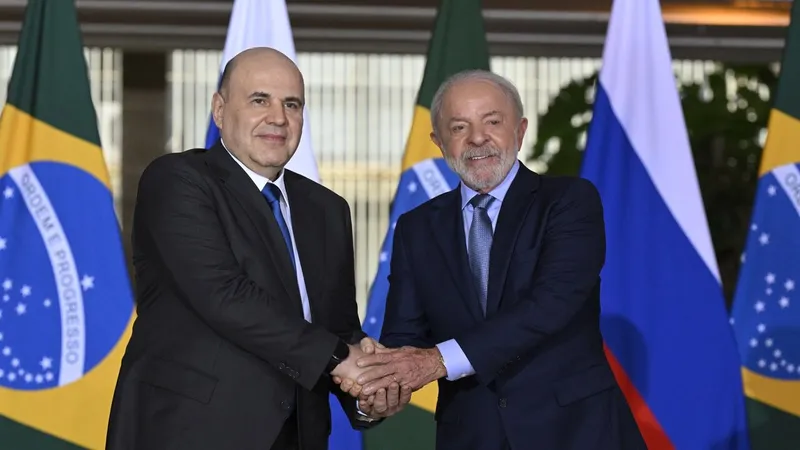
Brazil's reelected President Luiz Inácio Lula da Silva used a televised address on Sunday to reaffirm his commitment to fiscal responsibility, telling Brazilians he wants to help bring down the high interest rates weighing on households and businesses. The speech set out priorities for his fourth term but announced no new measures to address investor concerns about the public finances.
"The trajectory of public debt and high interest rates concern me which is why I reaffirm my commitment to fiscal responsibility, enabling sustainable social policies and the much-needed expansion of investment," Lula said in the address. "All of these efforts will be made while preserving fiscal rules," he added. He said one of the main objectives of his government was to raise investment to more than 20 percent of gross domestic product, in partnership with the private sector, and to create the conditions for borrowing costs to fall.
The address came two weeks after Lula won a fourth non-consecutive term on 25 October, defeating right-wing Senator Flavio Bolsonaro in a surprise runoff turnaround. Since that victory, the real has weakened, long-dated interest rates have risen and the benchmark stock index has fallen, as investors worried he would not do enough to fix the public finances and stop rising debt. Gross public debt has risen by more than 10 percentage points during Lula's current term, reaching 82.9 percent of GDP.
The numbers in the address check out against Reuters' account: gross public debt at 82.9 per cent of GDP, up more than 10 points during Lula's current term; the central bank holding its rate at 13.75 per cent after halting cuts last week; and the fiscal framework capping annual spending growth at 2.5 per cent above inflation, with real spending growth limited to 70 per cent of any rise in revenues. What the speech did not settle is whether any of it will bring rates down — Lula named no finance minister and announced no new measures, and the economists quoted in the coverage were unimpressed, saying the address was almost entirely about new spending.
Economists who watched the address were unimpressed. Sergio Vale, chief economist at MB Associados, said 99 percent of the speech focused on increasing spending, and Roberto Troster said Lula only announced more spending and that no initiative conveyed genuine concern about the upward trend in public debt. Households are already carrying record debt equivalent to 50.1 percent of income, and economists have cut their growth forecasts for next year.
Lula also used the address to repeat campaign pledges including eliminating taxes on the basic food basket, sending Congress a proposal for free weekend public transport, and funding the Pe de Meia Universitario programme. He said he plans to travel to COP31 in Turkey followed by the ASEAN summit in the Philippines. Whether the fiscal pledge steadies markets will depend on the appointments and the budget numbers that follow, neither of which the address provided.