

UK and France lead 2,800 troops in first major Multinational Force Ukraine exercise in Poland
Britain and France have opened Exercise Koalicja in Poland, the first major exercise of the Multinational Force Ukraine, with 2,800 troops from 11 nations rehearsing how a force would deploy to support Ukraine after the fighting ends.
Story So Far
Troops from eleven nations began Exercise Koalicja in Poland on Monday, in the first major exercise run by the Multinational Force Ukraine, the military arm of the Coalition of the Willing. The exercise runs from 9 to 22 November and rehearses how a force would move, protect and supply itself in Ukraine once the fighting ends. Britain and France are leading it jointly.
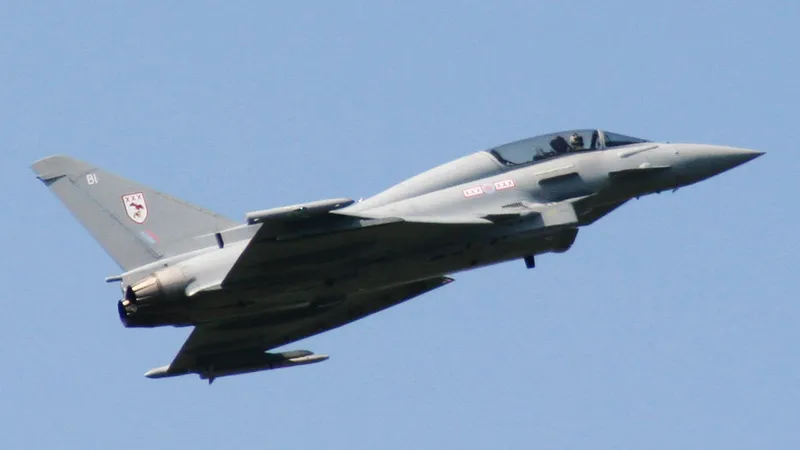
About 2,800 troops are taking part on land, in the air and at sea. The British contribution is 300 personnel, including soldiers from 7 Brigade, known as the Desert Rats, who will rehearse moving personnel and equipment, while RAF Typhoons and a Voyager refuelling aircraft fly sorties overhead, simulating how they would reassure commercial air travel once Ukrainian skies reopen. Turkish forces will stand up the maritime element in Istanbul, testing arrangements for clearing mines so commercial shipping can return to Ukraine's ports. The other participating nations are Belgium, Estonia, Germany, Lithuania, the Netherlands, Poland, Spain and Sweden.
The exercise is centred on Nowa Deba in south-eastern Poland, according to Polish defence ministry reporting. The Multinational Force Ukraine is commanded by British Lieutenant General Tom Bateman, and its headquarters is due to move from Paris to London this year. Defence Secretary Wes Streeting said the exercise showed Britain was preparing for the day peace comes to Ukraine, adding: "This isn't a hypothetical plan, it's a real force, ready to help Ukraine once the fighting stops." Bateman said the force would be more ready every day to support Ukraine when the fighting ends.
The British government's announcement, published on 3 November, is the source for the dates, the troop numbers, the list of participating nations and the British contribution, and it states plainly what the force is not: it would enter Ukraine only after fighting has ceased and at the request of Ukraine's government, it would not carry out peacekeeping or ceasefire-monitoring duties, and it is not part of NATO. The exercise location comes from Polish defence ministry reporting rather than the London announcement. France is reported to be sending the largest contingent, but the exact French numbers differ between outlets, so they are not stated here.
The exercise marks the point where the coalition's planning moves from paper to the training ground. For more than a year the Coalition of the Willing has been a political commitment by dozens of countries to support Ukraine after a ceasefire; Koalicja is the first test of whether eleven different armies can move, communicate and operate as one force under a single command. It also arrives as American, Russian and Ukrainian negotiators are due to meet in Abu Dhabi on 10 and 11 November, a reminder that the force being rehearsed has no ceasefire to deploy to yet.
The drills continue until 22 November, after which the participating nations will assess what worked and what did not. No deployment to Ukraine has been authorised, the British government has published no cost for the exercise, and no date has been set for any deployment. For now, Koalicja is a rehearsal, and its value will be judged on whether the logistics it tests hold up across borders, languages and eleven different militaries.
Keywords
- Exercise Koalicja
- Multinational Force Ukraine
- Coalition of the Willing
- UK
- France
- Poland
- NATO
- Ukraine security
Tags
Source
First major exercise of the postwar Ukraine force; closely watched in European capitals